Business analysts claim that excessive regulation is hindering Scotland’s hemp industry.
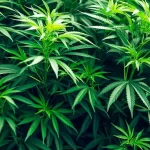
Researchers from the University of Aberdeen have emphasised how the crop might give Scotland a commercially viable and environmentally beneficial economy.
But at the moment, it is constrained by stringent Home Office regulations and a lack of infrastructure.
The plant belongs to the family Cannabaceae, which also includes species that are grown for usage as psychoactive drugs.
Although cannabis is considered a Class B narcotic in the UK, producers are permitted to grow low-THC versions of the plant if they are successful in obtaining Home Office approval.
However, as Dr. Wisdom Dogbe from the University of Aberdeen said to The National, farmers currently go through a time-consuming and expensive process when applying for a licence.
“It is very difficult to get approval from the Home Office,” he said. “Farmers told us that applying for a licence takes so long that by the time it has been approved the growing season is over.
“Then, even when farmers are granted a licence, they need to pay for the government to supervise their farm every three years.
“It’s really difficult for them because choosing to farm a new crop is a risk on its own. When you add policy challenges on top of that, it deters farmers from going into production.”
Dr. Dogbe added that the best thing the UK Government could do to foster this burgeoning industry is to “ensure that regulations are not too strict or expensive for farmers and make it easier for them to get a licence.”
Kyle Esplin is a co-founder of Holistic Highland Hemp, a business that grows hemp and sells it as CBD oil. CBD is a non-psychoactive chemical compound that is found in the plant and has several therapeutic advantages. He repeated Dr. Dogbe’s requests for regulatory easing.
He has stated that: “Farmers pay £550 for a three-year licence. But some have found that when they go to renew it, it gets denied.
“Whoever granted the licence may have looked at the map and thought ‘great’ but then the person deciding whether it gets renewed it has said, for example, that it’s too close to a B-road in terms of visibility.
“So, that’s the approval denied entirely at their discretion, even though the farmer has got a field and can grow it there.
“Then the government will say that in order to grow it the farmer will have to plant 10 metres of wheat all the way around the hemp to try and disguise it. But the pesticides used on wheat can’t be used on hemp so it all becomes unfeasible.
“The whole industry has just been disadvantaged and sidelined.”
Given the crop’s ecological advantages in terms of carbon-capture and biodiversity, Kyle Esplin said this is surprising. In fact, according to Dr. Dogbe’s research, the main reason why farmers like the crop in a fallow year is because it can help the soil’s health.
He said: “Hemp improves the biodiversity, leaves behind a lot of nutrients and also extracts toxins from the soil. So, from the farmers we spoke to, it seemed that the main reason they wanted to grow hemp was because of the environmental benefits.”
Despite having a lot of room for domestic production, the UK is a net importer of hemp seed and fibre.
The crop is still being used by some businesses despite the regulatory obstacles.
In the Scottish Borders, a business called IndiNature has just launched the UK’s first specialised natural fibre insulation plant, which produces its final product using industrial hemp.
A carbon-negative insulating product called IndiTherm contains hemp that is derived from UK farms.
Scottish Government minister Patrick Harvie praised the technology in his remarks at the mill’s inauguration as a long-term answer to the nation’s energy issues.
He said: “Developing climate-friendly solutions to heat and insulate our homes should be seen not only as a challenge which must be met to deliver on our climate obligations, but as a substantial opportunity for the sector and the wider economy.
“I was pleased to visit IndiNature to find out more about their innovative, sustainable insulation products and wish the team every success as it continues to develop, grow and support the acceleration of our green heat industry.”
But according to Dr. Dogbe, for the sector to flourish in Scotland, change is necessary: “Importing these products instead of producing them does not make sense. There is huge potential, the land is available, the soil is good and the weather is right for producing the crop here.”
Kyle Esplin echoed the need for change and claimed that the UK’s regulatory framework was deterring producers, especially when contrasted with Europe’s more permissive approaches to the crop.
“The biggest hesitation from farmers is not having the developed domestic market for their produce despite overall popularity of the plant,” he said.
“It’s also because they’ve been disadvantaged with the licencing system compared to their European counterparts.
“In Europe, the farmer is able to sell the flower for CBD extraction and the leaves, which get harvested for hemp tea.
“But in the UK, they’re only allowed to use the seed and the stalk; they’re not allowed to use the leaf and the flower. That’s a large part of their potential income being lost.”
Reference
Hunter, R. (2022). Home Office hampering potential of Scottish hemp farmers, experts say. [online] The National. Available at: https://www.thenational.scot/news/23152035.home-office-hampering-potential-scotlands-hemp-farmers/ [Accessed 28 Nov. 2022].