Bamyan
Price range: £40.00 through £105.00
This product is sold for souvenir collection purposes only to adults over the age of 18. This product is not for germination. It is illegal to germinate this product in the UK and most other countries. Holistic Highland Hemp Ltd does not accept any responsibility for any violations of the lay. All responsibility falls on the purchaser to comply to comply with local legislation.
Bumyan plays home to many different tribes, including Hazaras and smaller Tajiks minority groups as well as Sunni Afghans. The area’s landscape includes mountains ranges such as Arghendab Valley mountain range which lies in north eastern part of Bumyan circle district; are used by locals for trekking during summer months when temperatures drop significantly lower than elsewhere due their location at high elevations ranging from 4500m-6000m above sea level.
The majority of the population are Hazara, who largely view themselves as separate from other ethnicities throughout Afghanistan due to their distinctive cultural identity. Bumyan has long been regarded as special by Afghans because it was here that Babur founded his dynasty in 1485 A.D., which continued until 1886 when King Abdur Rahman extended Afghan sovereignty over the entire north western portion of India (now Pakistan).
Bumyani culture also remains distinct due to its location at a crossroads for East and South Asian trade routes – historically known as “The Silk Road” – thus enriching its inhabitants with Indian, Persian, Arabic and Turkic influences. Locally produced agricultural products include wheat, cotton, sesame oilseed crops critical ingredients used locally and internationally such edible nuts used widely in recipes across the world.
Bamyaanad Historical Plethoraof Bhuddism
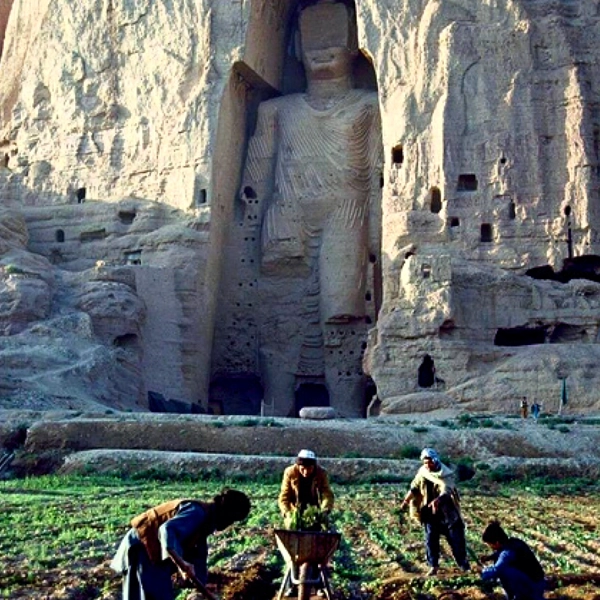
Bamyan is one of Afghanistan’s poorest provinces and has been severely affected by conflict and insecurity over the years. Agriculture is the main source of livelihood for the people of Bamyan. The Bamyan Valley is a UNESCO World Heritage Site and has been recognised for its cultural and historical significance. The province is home to two giant statues of Buddha, which were carved into the cliff face more than 1,500 years ago. These statues were destroyed by the Taliban in 2001.
Statues stood 55 meters (180 feet) tall, while the smaller one was 38 meters (125 feet) tall. The statues were created in the 6th century CE and were a major symbol of Buddhism in the region.
The statues were carved out of the sandstone cliffs by artists who used simple tools such as hammers and chisels. It is estimated that it took around 50 years to complete the larger statue, while the smaller one was finished in around 25 years.
The statues were once part of a large complex of Buddhist monasteries, temples, and other structures that were built in the Bamyan valley between the 4th and 5th centuries CE. The complex was a major centre of Buddhist learning and culture, and it attracted pilgrims and scholars from all over Central Asia.
Efforts have been made in recent years to restore the Bamyan complex and to preserve its cultural and historical significance. The restoration work has included the reconstruction of some of the smaller temples and other structures, as well as efforts to document and preserve the remaining fragments of the destroyed statues. However, the larger Buddha statue remains in ruins, serving as a poignant reminder of the destructive power of war and intolerance.
Bamyan & Cannabis
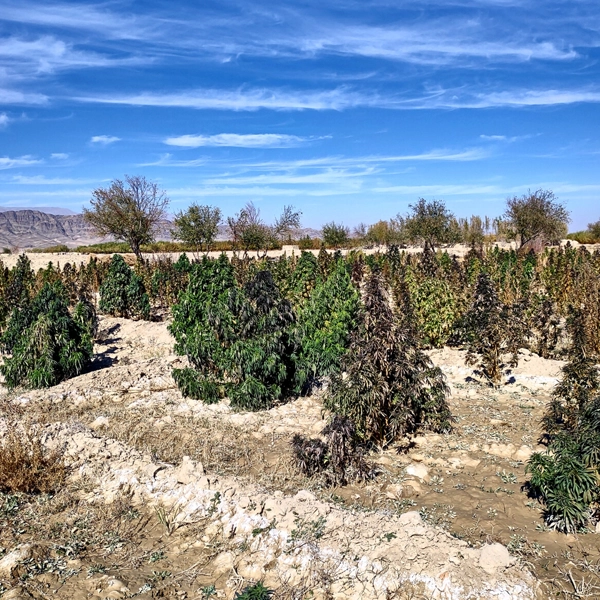
Cannabis has a rich history of cultivation in Bamiyan, where farmers have taken advantage of the region’s favourable climate and fertile soil to grow this valuable cash crop which finishes around early to mid October with 8-9 weeks of flowering.
Despite the harsh conditions of Central Afghanistan’s cold desert region, local farmers have been growing cannabis in clay and rock soil.
Even so, this soil mixture is not ideal for growing cannabis, and the landrace’s capacity to produce results is limited, but the landrace of this region has proven to be reliable enough to yield satisfactory results for a long period of time.
The landrace of this region, on the other hand, has developed distinct survival traits in response to the specific growing conditions and climates. The search for landraces from various isolated locations is critical for facilitating the development of new cannabis strains in the future.
Unfortunately, the diversity of these landrace strains is challenged by the new Afghan regime’s restriction. Therefore, it is important to recognise and appreciate the cultural heritage associated with these landrace strains and support sustainable and equitable development in the cannabis industry.
Recent changes in government policy have made cannabis cultivation more challenging, as it has been pushed to more isolated areas where it is at risk of being eradicated. By valuing and preserving the diversity of cannabis landraces, we can ensure the continued evolution and growth of the cannabis industry for generations to come.
Crop Remarks
The most common base aroma found in the population of Bamiyan is a woody note with a hint of clove and spices. This gives the plants of Bamiyan a warm and comforting scent that is reminiscent of a cosy cabin in the woods.
However, not all plants were alike. Some variants within the population had a very citrusy aroma, with a refreshing pine-like scent. Variants like these are said to produce a more uplifting and energising effect, making them ideal for daytime use.
On the other hand, some darker phenotypes of Bamiyan have a more pungent aroma, with a garlicky smell. These plants are known for their more relaxing effects, making them ideal for use before bedtime.
In conclusion, the genetics of C. Afghanica play a big role in determining its effects and aroma. Whether you’re looking for a smoke to help you unwind after a long day or to help you focus and be productive, understanding the terpenes can help you make an informed decision.
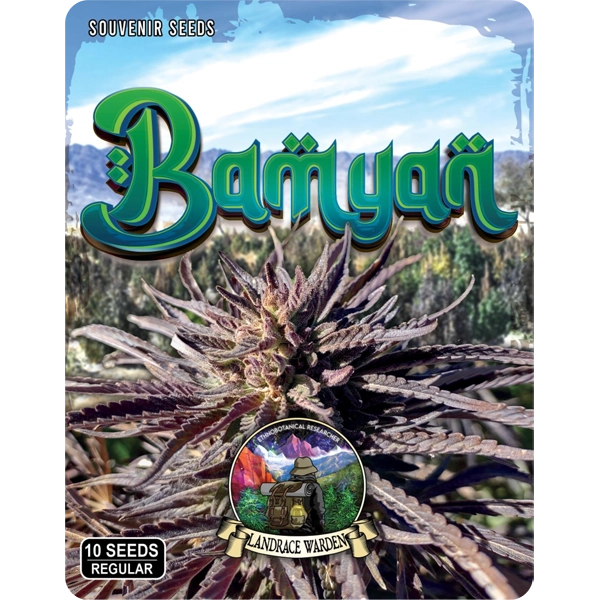
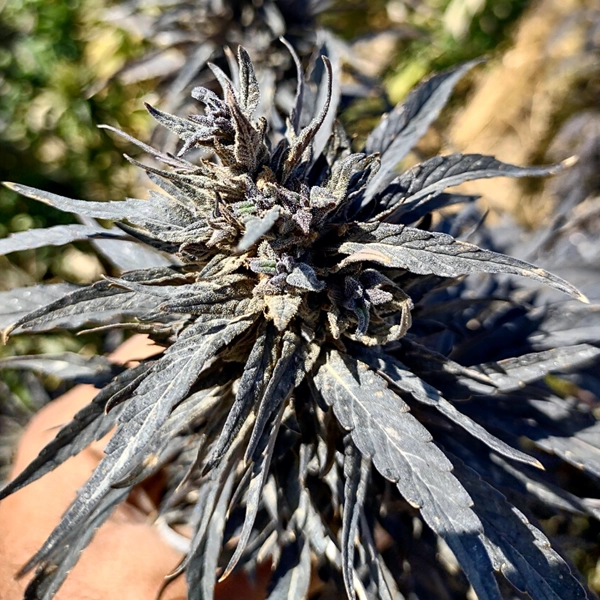
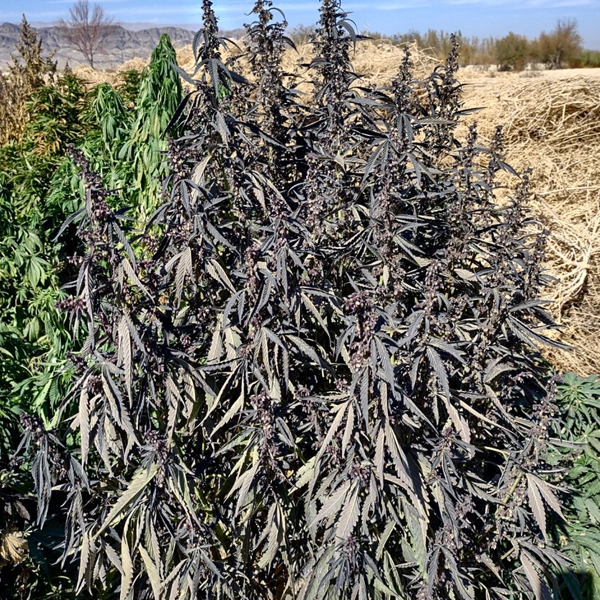
Despite these challenges, the Bamiyan region is home to a unique and highly sought-after Cannabis landrace, known for its abundant trichomes and vivid coloration. This coloration is largely due to the production of anthocyanins, which are powerful pigments found in many plants.
In Cannabis, several factors can influence the production of anthocyanins, including light, temperature, and the availability of key nutrients like nitrogen, phosphorus, and potassium. Genetics also play a role, as some Cannabis variants are naturally richer in anthocyanins than others, and some landraces within a population may produce more or less anthocyanins than others.
Additionally, anthocyanin production in Cannabis can also be a response to stress, such as exposure to UV radiation, high salinity, or herbivory. This is believed to serve as a protective mechanism, as anthocyanins can help absorb harmful UV light and increase the plant’s resilience to stress.
Overall, the regulation of anthocyanin production in Cannabis is complex and influenced by a combination of environmental and genetic factors. By gaining a deeper understanding of these factors, we can learn to cultivate stronger and healthier plants, with greater nutritional and health benefits.
Related products
-
Souvenir Seeds Price range: £40.00 through £105.00 Select options This product has multiple variants. The options may be chosen on the product page

-
Souvenir Seeds Price range: £40.00 through £105.00 Select options This product has multiple variants. The options may be chosen on the product page
-
Souvenir Seeds Price range: £40.00 through £105.00 Select options This product has multiple variants. The options may be chosen on the product page